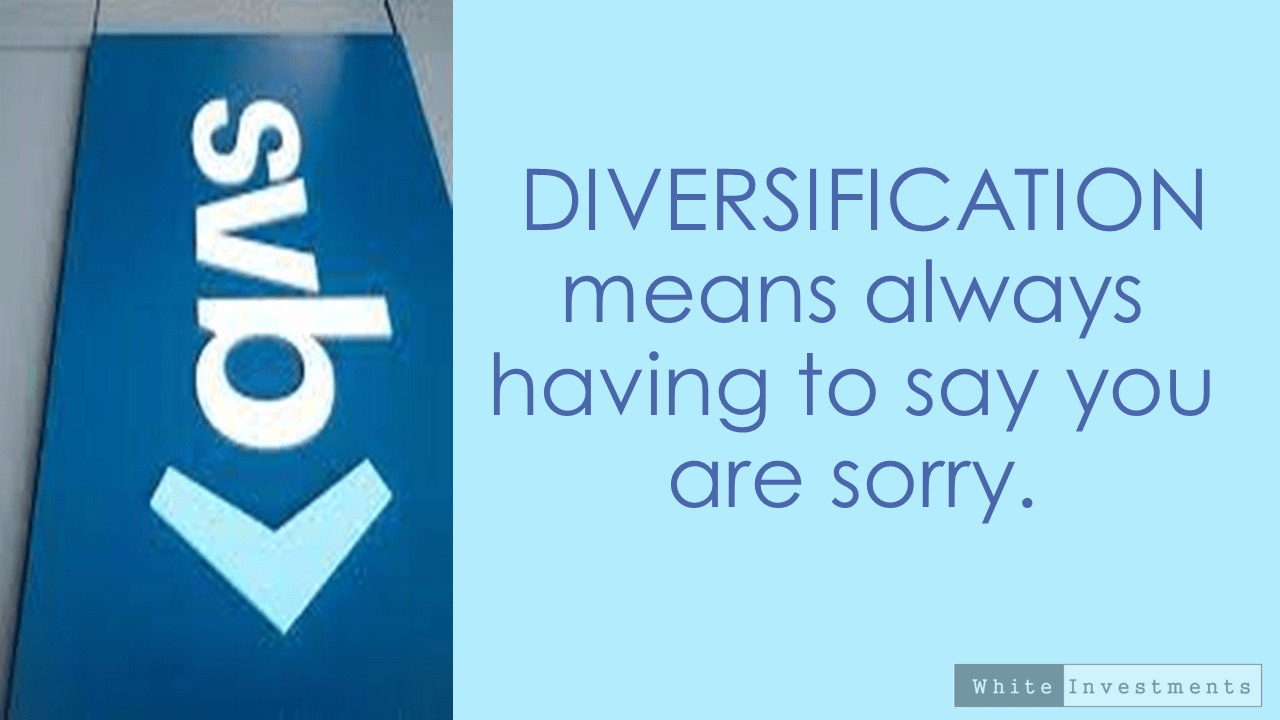
Common sense can be one of the first casualties when faced with a crisis. But common sense investing is the same in a crisis as absent a crisis.
It has been another interesting period as far as markets are concerned. Bank failures have been all the rage in financial media.
Even though I find lots of this stuff interesting, I don’t typically send out communications about such things.
Good reasons not to share market news:
I cannot add any value to the copious amounts of analysis already being generated.
By the time you read it (if you do) its old news anyway.
It encourages noise and a short-term focus in a process in which I work hard at trying to eliminate those things.
I don’t change portfolio’s or investment strategies based on market news but valuations or changes in your objectives.
I don’t want you worrying about things you have no control over.
Is it still going to matter in 12 months time? Probably not.
Is the new banking crisis contained or not? Is there more to come?
I don’t know
Honest answer – I don’t know. When I managed large credit funds in 2007/2008 there were many really smart people saying that the financial crisis was contained. That was clearly false.
What I learned back then is that is not what everyone is cleverly writing about that should worry you.
It is the stuff that they are not writing about that is going to bite you. And that is because that stuff is simply not knowable.
It is not knowable because every action has consequences. Thinking that we can control a complex system has never proven to be true. You fix one thing and break another.
Combine Investment and planning skills
In my opinion that is why combining both investment skills with planning skills brings the two worlds together in a way that is meaningful for your success.
Ensuring your investments align with your planned objectives (what is important to you) makes it easier to keep your strategy focused on your successful outcomes, even when the short-term noise is thunderous.
So what to do
Simple actions that actually work include staying well diversified – that means because you don’t know for certain, you don’t build a portfolio or a plan as if you do.
It can be helpful to have some money to put to work if things cheapen up, have some money invested in case they don’t.
You won’t be the best performer this year. You won’t be the worst performer either. But you will survive to see your plan through to fruition.
I thought this was the best article I read regarding the SVB failure – *HINT* it has little to do with SVB and I challenge you not to take something useful out of it.
Common sense can be one of the first casualties when faced with a crisis. But common sense investing is the same in a crisis as absent a crisis.
It has been another interesting period as far as markets are concerned. Bank failures have been all the rage in financial media.
Even though I find lots of this stuff interesting, I don’t typically send out communications about such things.
Good reasons not to share market news:
I cannot add any value to the copious amounts of analysis already being generated.
By the time you read it (if you do) its old news anyway.
It encourages noise and a short-term focus in a process in which I work hard at trying to eliminate those things.
I don’t change portfolio’s or investment strategies based on market news but valuations or changes in your objectives.
I don’t want you worrying about things you have no control over.
Is it still going to matter in 12 months time? Probably not.
Is the new banking crisis contained or not? Is there more to come?
I don’t know
Honest answer – I don’t know. When I managed large credit funds in 2007/2008 there were many really smart people saying that the financial crisis was contained. That was clearly false.
What I learned back then is that is not what everyone is cleverly writing about that should worry you.
It is the stuff that they are not writing about that is going to bite you. And that is because that stuff is simply not knowable.
It is not knowable because every action has consequences. Thinking that we can control a complex system has never proven to be true. You fix one thing and break another.
Combine Investment and planning skills
In my opinion that is why combining both investment skills with planning skills brings the two worlds together in a way that is meaningful for your success.
Ensuring your investments align with your planned objectives (what is important to you) makes it easier to keep your strategy focused on your successful outcomes, even when the short-term noise is thunderous.
So what to do
Simple actions that actually work include staying well diversified – that means because you don’t know for certain, you don’t build a portfolio or a plan as if you do.
It can be helpful to have some money to put to work if things cheapen up, have some money invested in case they don’t.
You won’t be the best performer this year. You won’t be the worst performer either. But you will survive to see your plan through to fruition.
I thought this was the best article I read regarding the SVB failure – *HINT* it has little to do with SVB and I challenge you not to take something useful out of it.
Used to monitor number of Google Analytics server requests when using Google Tag Manager
1 minute
_ga_
ID used to identify users
2 years
_gid
ID used to identify users for 24 hours after last activity
24 hours
_gali
Used by Google Analytics to determine which links on a page are being clicked
30 seconds
__utmx
Used to determine whether a user is included in an A / B or Multivariate test.
18 months
_ga
ID used to identify users
2 years
__utmv
Contains custom information set by the web developer via the _setCustomVar method in Google Analytics. This cookie is updated every time new data is sent to the Google Analytics server.
2 years after last activity
__utmb
Used to distinguish new sessions and visits. This cookie is set when the GA.js javascript library is loaded and there is no existing __utmb cookie. The cookie is updated every time data is sent to the Google Analytics server.
30 minutes after last activity
__utmc
Used only with old Urchin versions of Google Analytics and not with GA.js. Was used to distinguish between new sessions and visits at the end of a session.
End of session (browser)
__utmz
Contains information about the traffic source or campaign that directed user to the website. The cookie is set when the GA.js javascript is loaded and updated when data is sent to the Google Anaytics server
6 months after last activity
__utma
ID used to identify users and sessions
2 years after last activity
__utmt
Used to monitor number of Google Analytics server requests
10 minutes
_gac_
Contains information related to marketing campaigns of the user. These are shared with Google AdWords / Google Ads when the Google Ads and Google Analytics accounts are linked together.