Key takeaways:
South Africans investment returns are impacted by:
- What they invest in – Asset allocation (cash/money-market, fixed-income/bonds, equities/shares, & property)
- What the market does – Asset Allocation
- What tax they pay on your investment returns – Asset LOCATION or the type of account you hold your investments in. (retirement funds, tax free savings accounts, endowments, taxable accounts).
- What fees they pay to those that help you choose, administer and manage those investments – Advice, Admin & Investment Management.
- Inflation or how much your cost of living increases each year. (Consumer Price Index or CPI)
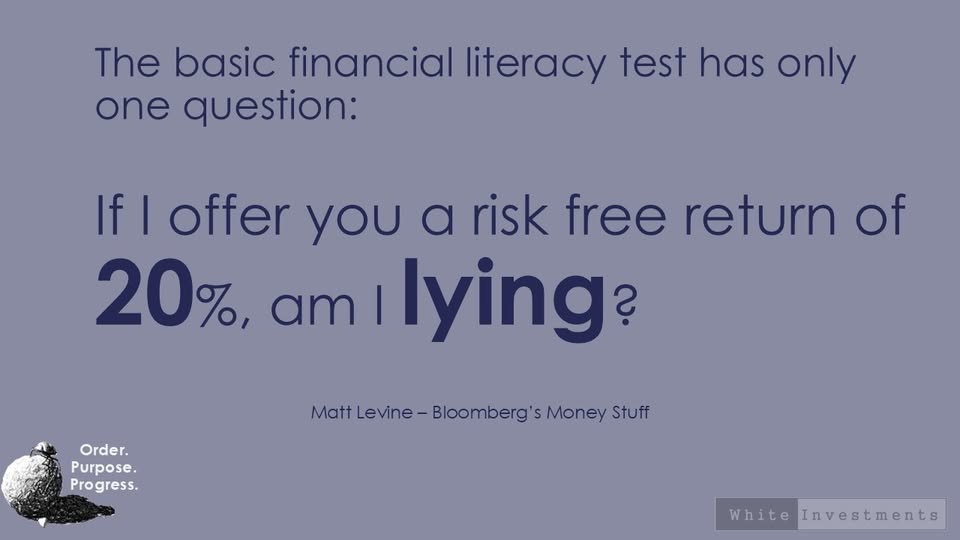
Beware the false promise
I don’t believe misrepresenting returns is a good way to initiate a meaningful relationship – but apparently not everyone agrees with this.
Investment returns are increasingly headlining in social media marketing campaigns by various advisors and wealth management practices.
You will have seen them. The hook is a nice big number in the lead graphic – If you have not earned at least *15% you need to talk to us, type of thing.
That nice little *asterix is your clue to two things….
Those returns are not guaranteed (and their compliance department should not allow them to insinuate such even if covered in the small print).
It is likely to be based on some really good recent returns which usually means they won’t be repeated. (2025 was an unusually great year for SA assets remember)
REMEMBER: Past performance shows you the returns you are not going to earn.
This makes understanding how returns really work, including what a reasonable return expectation is, crucial to being able to make good decisions for yourself.
At the simplest level, investment returns are what you receive for letting someone else use your money.
What determines those returns and importantly how much of them you get to KEEP, is a little more complicated.
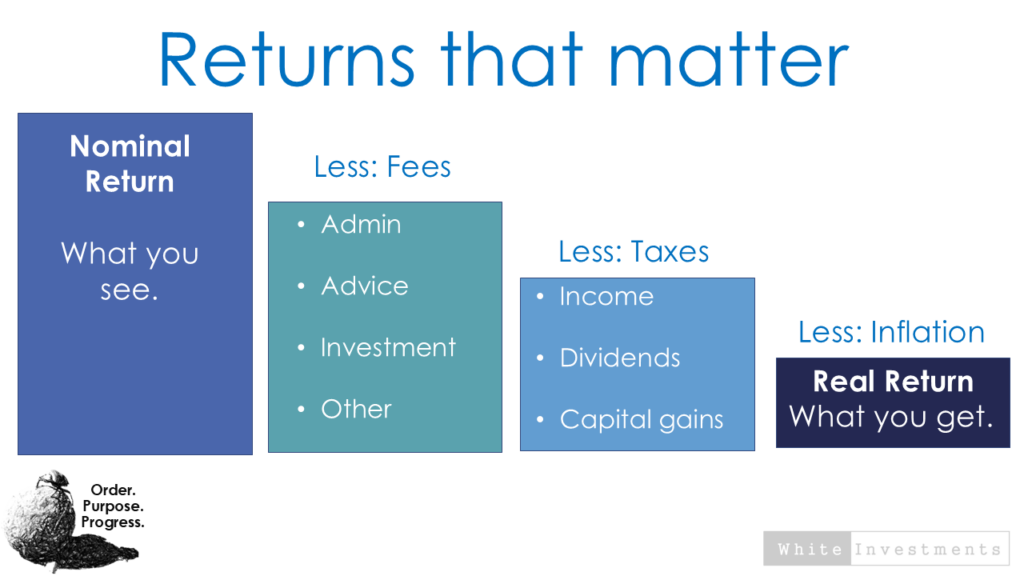
Your headline or nominal return is usually what most people are focused on. (including sales and marketing peeps it seems).
It is linked to your investment strategy (what you invest in – Asset Allocation) and what you get to see in a factsheet for example.
But the real compounding of your wealth, is one that protects the purchasing power of your money. This needs to account for costs, taxes and inflation.
These are the REAL RETURNS you get to keep.
1. What you invest in:
There are only two broad ways you can earn returns. Income and growth in capital.
A ) Growth Assets:
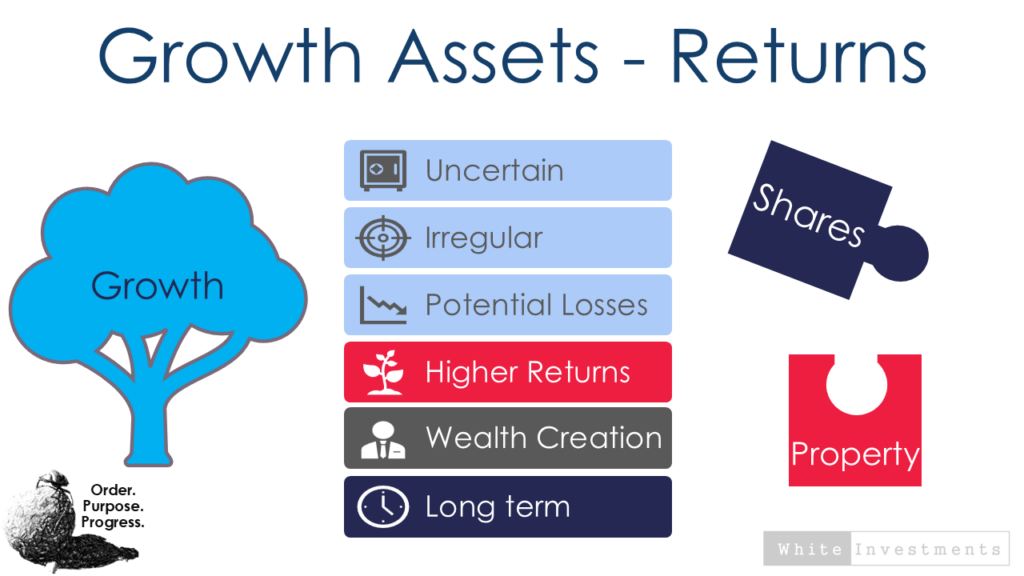
Euity and Property investments earn returns from a combination of income and capital growth (increase in value or price).The income, in the form of rental or dividends, also typically grows over time. But the returns are less certain over short time periods, and so these types of investments are better for long term wealth creation.
B)Income A
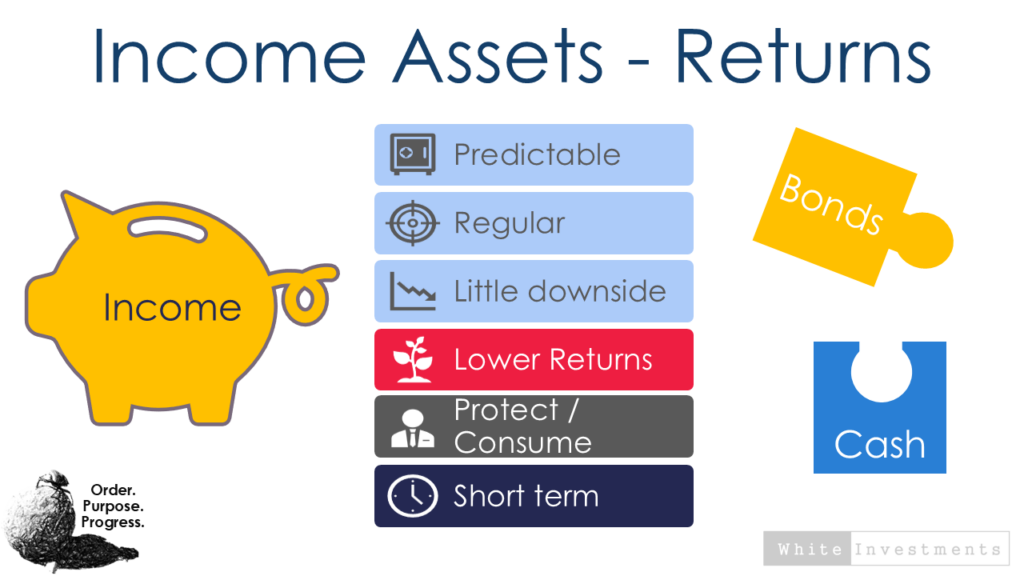
Cash and bonds produce returns predominantly in the form of interest income and these returns are therefore more predictable and certain. This certainty of returns, usually comes at the cost of delivering lower returns over the long-term. This makes income assets great for short-term goals; they can provide predictable cashflows and capital preservation.
How do you choose what to invest in?
Any goal or objective has a future amount of funds needed, an idea of what you can contribute towards the goal and some future date you want to achieve it by.
From these inputs you will be able to get an idea of the investment returns you require to get the job done.
In other words what you invest in is driven by your needs:
- Your need for certainty (risk).
- Your need for liquidity (access to your money).
- Your need for income or cashflows.
- Your need for returns above inflation (growth).
- Your need for peace of mind and your ability to stick with a strategy (risk tolerance).
- It makes sense to align your plan (and required returns) with an investment strategy that gives you those ‘required-returns’ with as much certainty as possible.
2. What the market does:
Over long periods of time the typical risk-reward dynamics between growth and income assets does hold.
But over shorter periods they can break down completely.
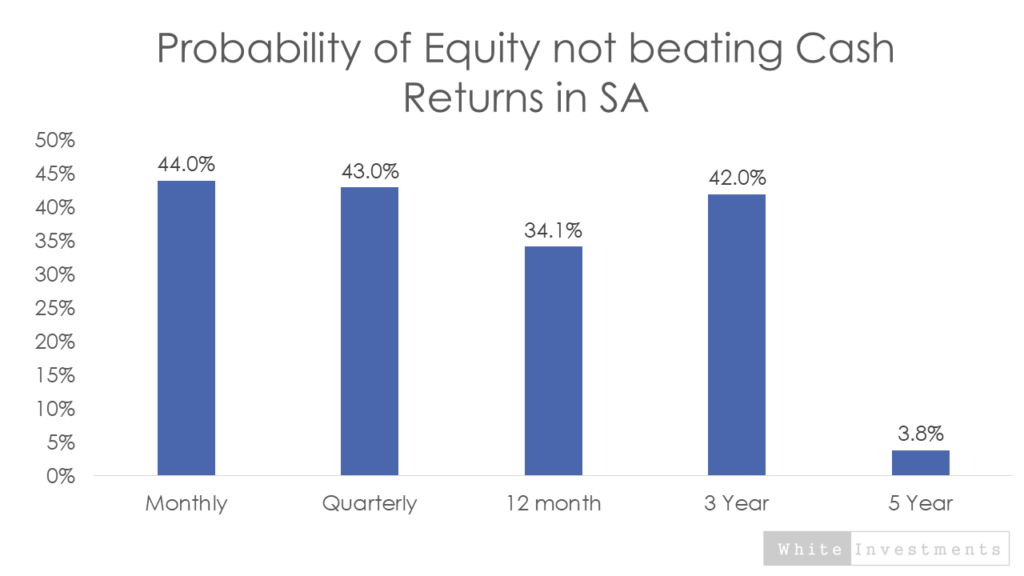
Most are surprised to hear that South African cash investments beat South African equities almost 44% of the time, if you are watching closely from one month to the next.
But as you extend your time horizon out to 5 year intervals, this falls to just 4% of the time.
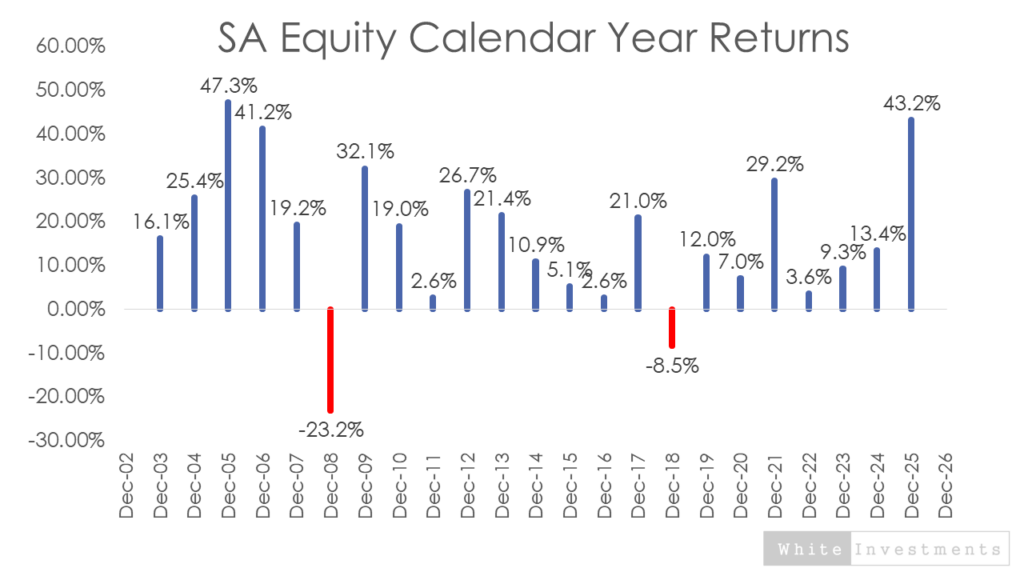
SA equities may have an average return close to 12.8% over the long term (20 years) but will hardly ever actually return 12.5% in any single year.
You will likely receive far more or far less than that average in any given year.
What can you reasonably expect to earn as returns?
It is perfectly reasonable to ask what kind of returns you could expect to earn.
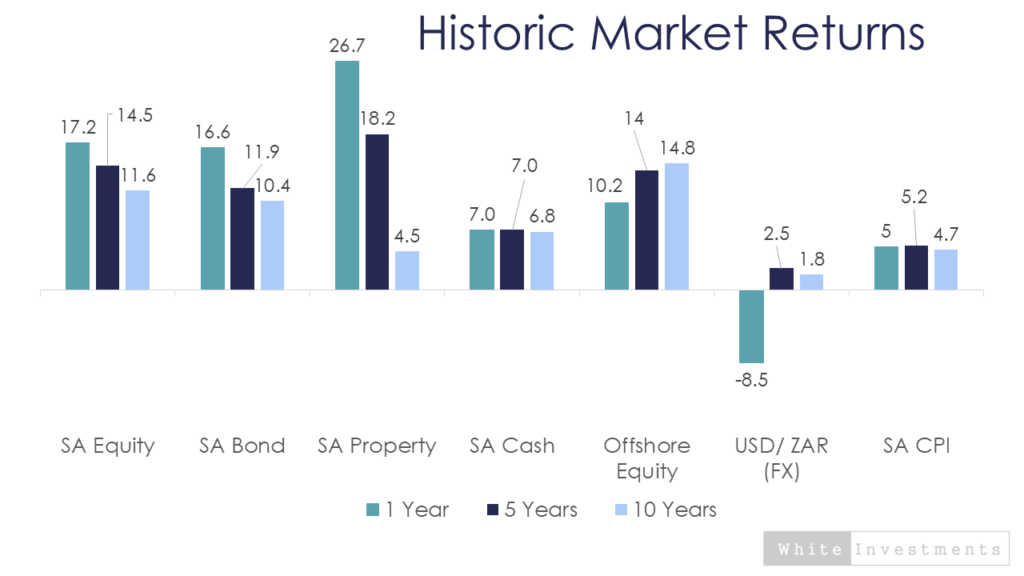
There are many variables that can impact on the investment returns we can reasonably expect to receive over time, so we usually resort to getting a general sense by looking at the historic market returns.
Or alternatively, you can get a fair indication from products that use a combination of these investments (called ‘multi-asset funds’ or ‘balanced funds’).
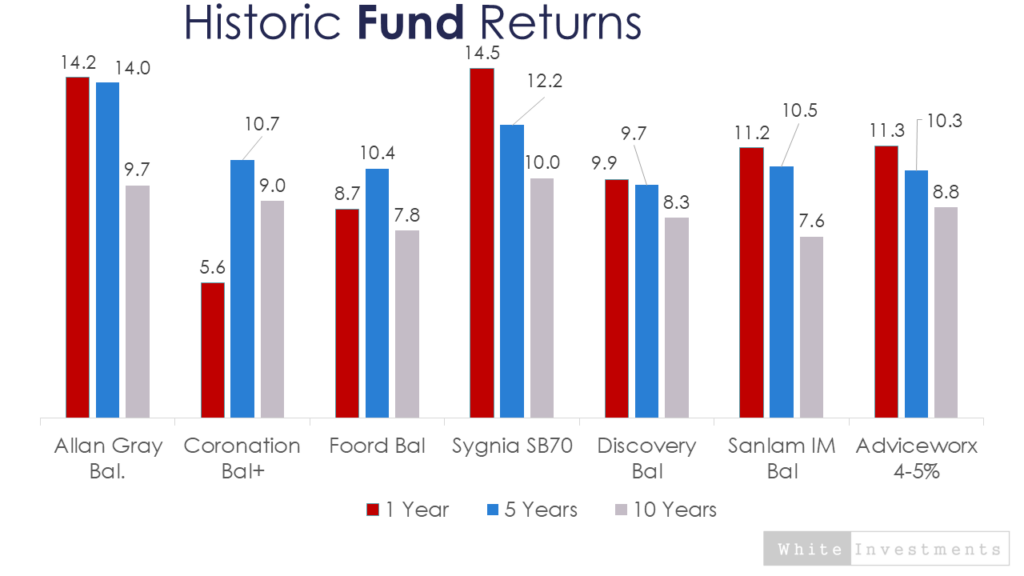
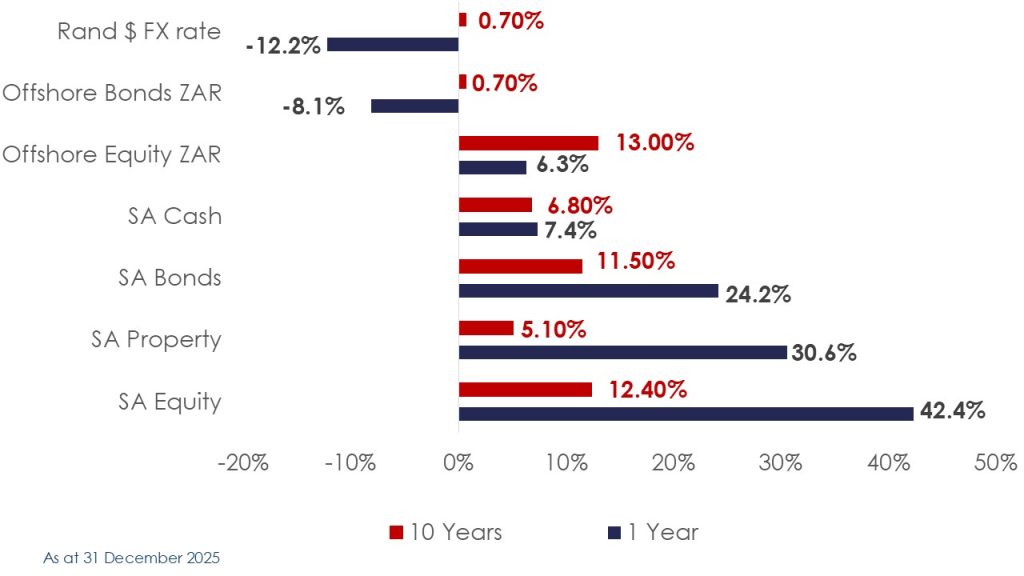
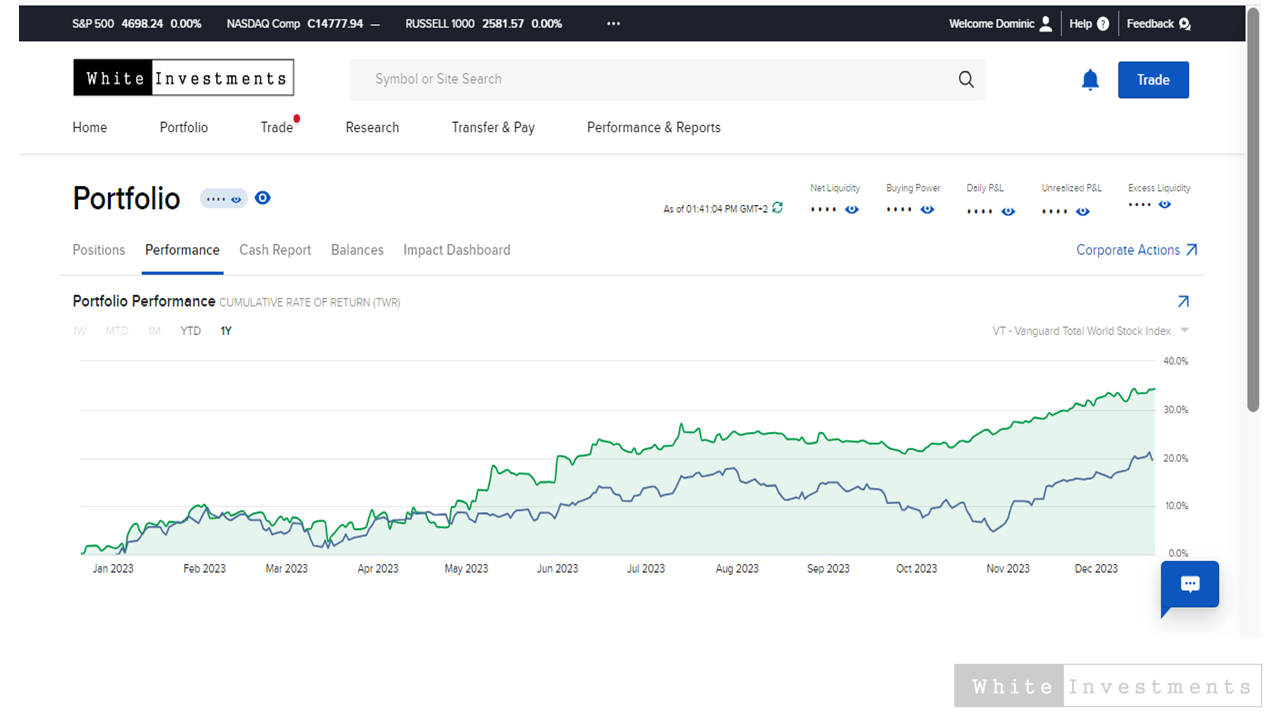
You can see where the sales or marketing messages get the *15% returns from, by looking at the 1-year numbers.
And you can see why these are probably not reasonable returns to bake into your future plan by considering the 10-year stats.
This basic analysis provides a more realistic measure, as it looks at a longer economic and investment cycle.
A plan based on fictitious return expectations will not get the job done for you and if you are not paying attention, then you may find out too late.
If you do seek help, the promise of lofty headline returns is an easy test to conduct.
A genuine, knowledgeable and experienced partner will have the intention to work with you, in your best interest.
They won’t be trying to hook you in using lofty investment return promises.
3. What tax you pay
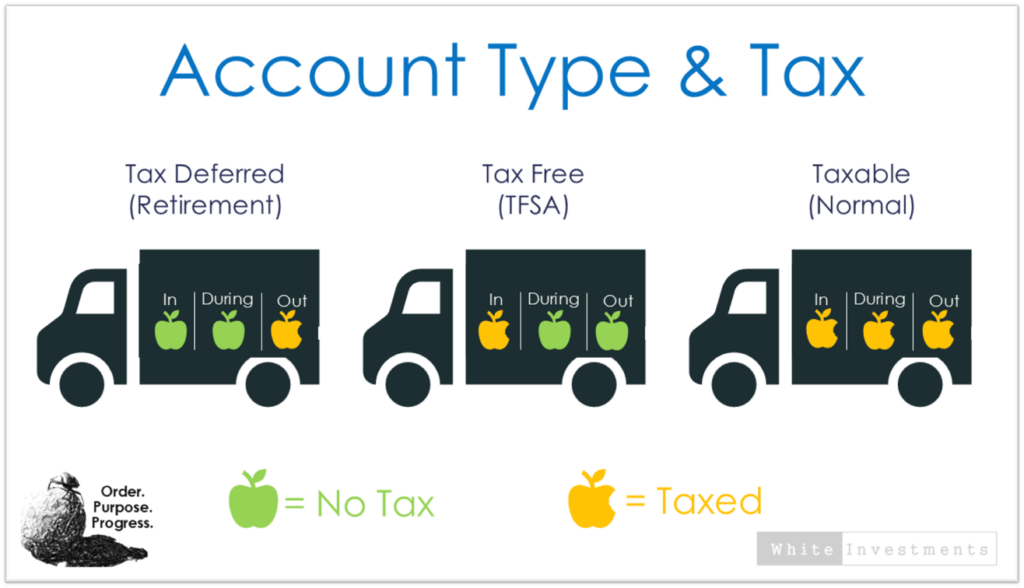
This is the part your real return which you will not see explicitly shown in any statement or report.These ‘returns’ come from saving tax.
Every Rand you save on tax, is a Rand that stays invested, and compounds year after year.
Money paid unnecessarily in tax is a permanent deduction. Once you pay it over to SARS there is no recovery mechanism.
The exact same investments in different types of of accounts will earn different returns.
Tax efficiency in your plan can therefore be just as important as investment choice.
Using retirement funds, interest income allowances, tax free savings and various other tax efficient options is a must.
4. What fees you pay
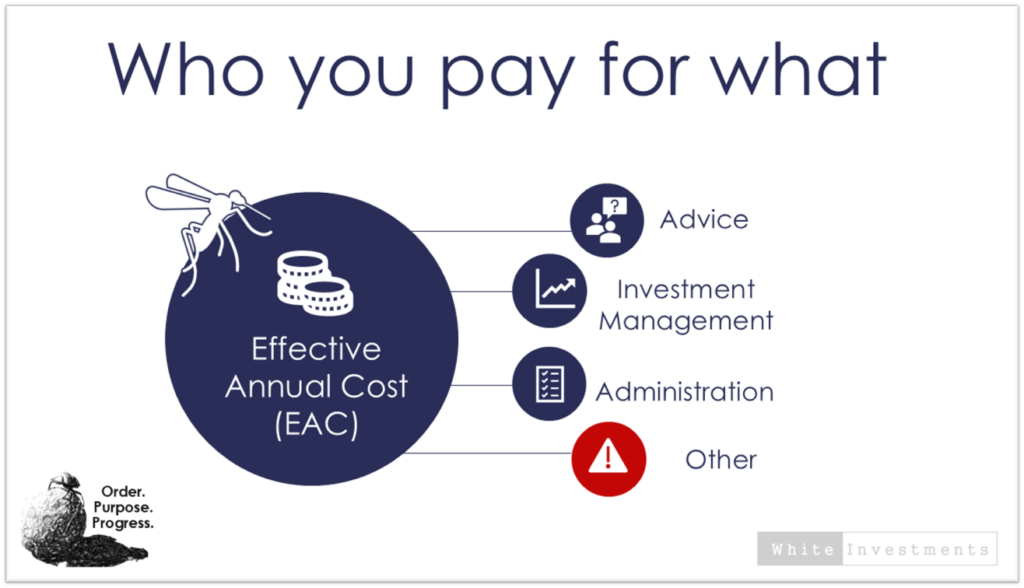
In a similar way as tax, your fees can reduce the returns you keep and compound. So fees are often touted as the enemy to be avoided at all costs.
There is an important difference though.
High fees alone do not mean worse outcomes and neither do low fees ensure a better outcome. Personally, I don’t think fees are the problem. I am happy to pay fees when I receive something more valuable in return.
The problem comes in when you get no value or the value you get is less than the fee you are paying.
The solution is to understand what you pay, to whom and for what added value.
You can then determine if you are receiving that value or not.
You get to eliminate those fees or change to a better value proposition.
You have the power and should use it.
PS: Zero fees are not a reasonable starting point as even DIY investors incur fees. You need a platform (admin fee) to manage your money and you need to invest (brokerage/investment management fee for funds or ETF’s)
5. Inflation
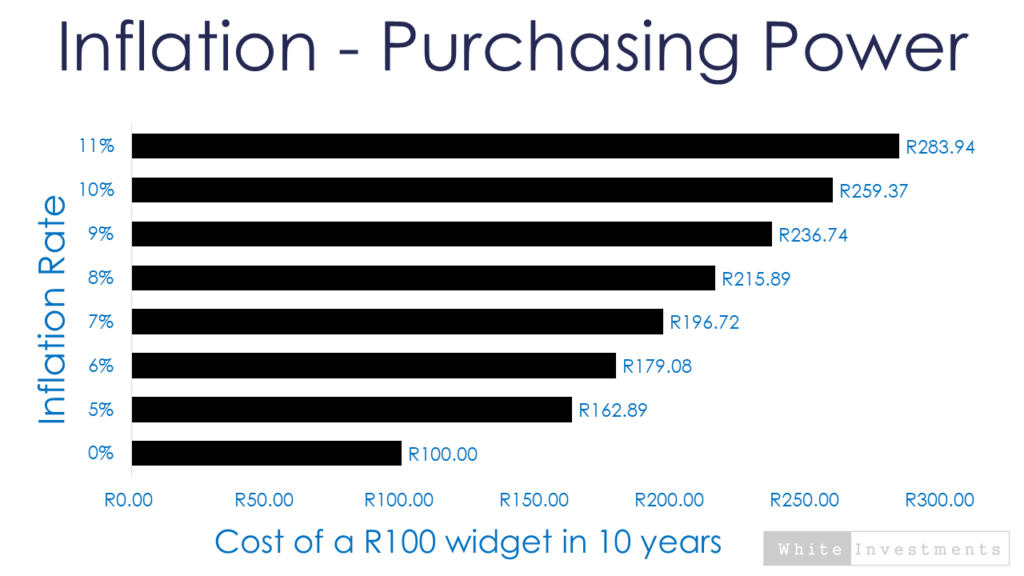
When developing a spending plan for your monthly expenses, or calculating how much you may need in retirement, you need to include some form of increase in your costs each year.
R1000 today and R1000 in 10 years’ time will buy you a completely different amount of groceries when you visit your local store.
Another way to express this idea is to say that the ‘purchasing power’ of your R1000 has fallen. The same amount of money buys you less this year than it did last year.
The bare minimum return-hurdle therefore, is to make sure you keep up with the increases in your cost of living (inflation).
Since each of us consume a different mix of goods and services to make up our monthly expenses, we each technically have our own individual inflation rate.
But there is a broad measure of consumer inflation which is calculated and published by Stats SA that gives an indication of inflation – This is Consumer Price Inflation or CPI for short.
You can manage your consumption to some extent, and so from a personal finance perspective, you can manage your inflation.
But a lot of our costs are not in our control, which means we don’t have a choice. Electricity, water, rates and medical fall into this category.
Why this matters to you
Generating the best returns for yourself goes beyond picking the best investments.
Good outcomes are better achieved by being pretty good at personal finances, financial planning and investments combined, rather than perfect in any one.
Everything is linked.
A system that captures how each element impacts the other and creates the conditions in which you make better decisions at each level is incredibly powerful.
#orderpurposeprogress